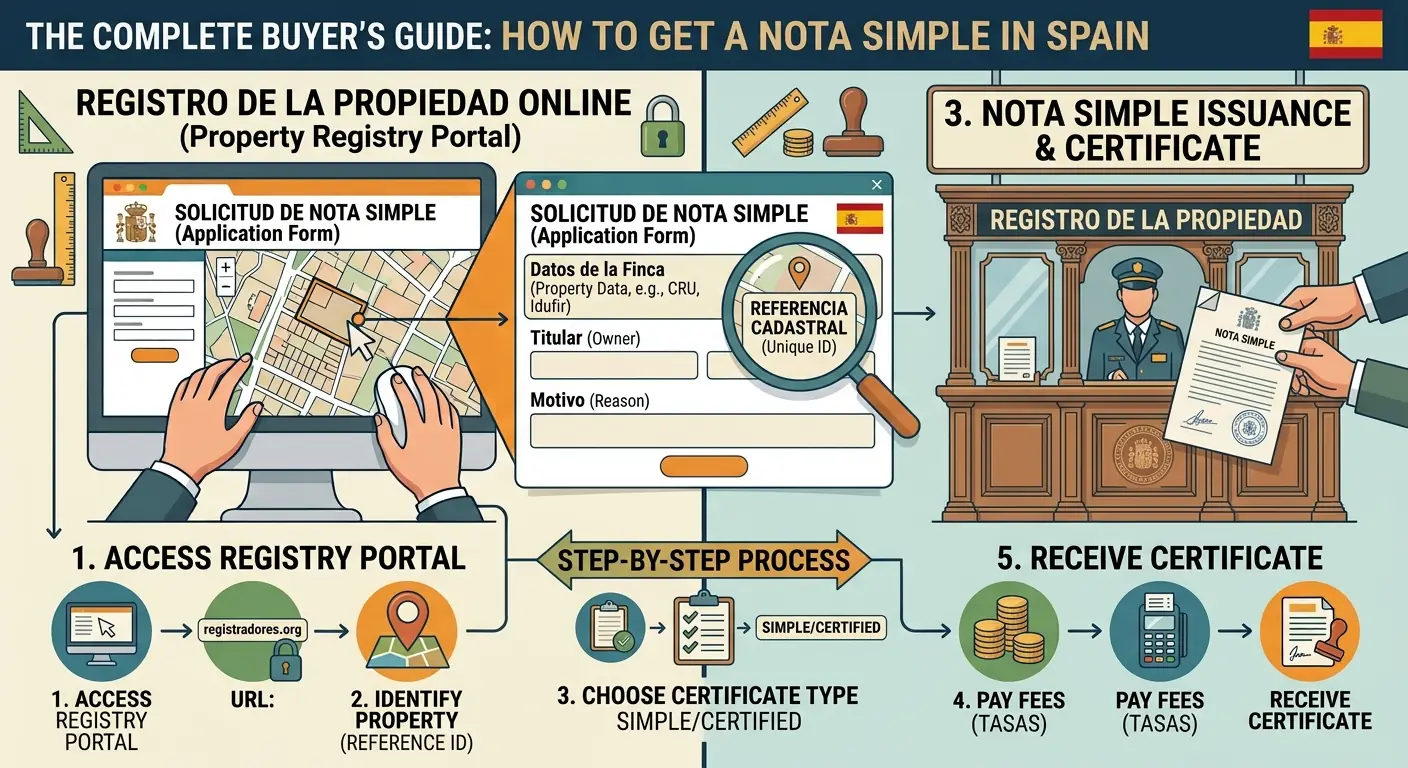
A Nota Simple is one of the first documents worth requesting when checking a property in Spain. It shows who's registered as the owner, and what rights or restrictions are registered against the property. Here's how to get one, step by step.
What Is a Nota Simple?
A Nota Simple is an extract from the Registro de la Propiedad (Land Registry) that contains:
- a description of the property (address, area, boundaries, referencia catastral);
- the name of the registered owner;
- registered rights — pleno dominio (full ownership), usufructo (usufruct), and others;
- charges — hipoteca (mortgage), embargo (court seizure), servidumbre (easement), and other cargas.
A Nota Simple is informational, not a certificación registral — a document with full evidentiary force, which can also be requested separately if needed. For most pre-purchase checks, a Nota Simple is enough.
Where to Request a Nota Simple
There are three main routes.
1. Online, through the official portal
The Colegio de Registradores de España runs an electronic ordering service at registradores.org. To place an order, you'll typically need one of:
- the referencia catastral;
- the property's address;
- the registration record number (finca registral), if you already know it.
2. In person, at the Registro de la Propiedad
You can go directly to the Registro de la Propiedad that covers the property's location. Spain's registry system is organised territorially, so it's important to go to the specific Registro responsible for that property — which doesn't always match the town's name, so it's worth confirming in advance.
3. Through a lawyer or gestoría
In practice, many buyers simply have their lawyer or gestoría order the Nota Simple for them — convenient if you already have legal support in place for the purchase.
📌 If you don't have the referencia catastral yet, start with How to Get Cadastral Information on a Property in Spain — that's the first step before ordering a Nota Simple.
Cost and Turnaround
The Nota Simple's price is set at the national level and is relatively low. The official tariff under Real Decreto 1427/1989 is €3.01 for an in-person request, while an online order through the Colegio de Registradores' own telematic service typically runs around €9–11 including VAT — third-party websites that order it on your behalf often charge more, commonly €15–30. (Note that the gap between the legal tariff and typical telematic pricing has drawn consumer-association scrutiny in Spain, so it's worth ordering directly through the official portal rather than an intermediary if cost is a concern.) Online orders are typically fast — often within one to two business days. Exact current fees and turnaround times are best confirmed directly on the Colegio de Registradores portal, since they can be updated.
What to Check When You Read It
Once you have the document, check:
- whether the registered owner matches the person you're negotiating with;
- whether the area and description match what's advertised and what's in the Catastro;
- whether there's a hipoteca — and if so, how it will be cleared as part of the sale;
- whether there are other cargas — easements, seizures, court annotations;
- the issue date — the registered situation can change, so what matters for the actual transaction is the information current at the moment of signing, not at the moment of your first request.
If anything in the Nota Simple is unclear — especially the wording around charges — that's worth a conversation with a lawyer rather than guessing at the meaning yourself.
A Nota Simple Says Nothing About Physical Condition
Worth stating plainly: a Nota Simple only answers a legal question — who owns the property and what's registered against it. It has nothing to do with the property's physical condition: damp, wiring, the state of the roof or the pool.
📌 For exactly what the document does and doesn't cover, see What Does a Nota Simple Actually Show?, and for how it relates to the cadastral system, see Catastro vs Registro de la Propiedad
Frequently Asked Questions
Can I order a Nota Simple myself, without a lawyer?
Yes. The Colegio de Registradores' online portal is open to anyone, and you can also request one in person at the relevant Registro de la Propiedad.
How long does a Nota Simple stay valid?
It reflects the registered situation at the moment it's issued. The registry can change afterwards — for example, a new embargo could be recorded — so it's normal to request a fresh copy closer to signing.
Does a Nota Simple prove the property is in good technical condition?
No. It only confirms what's legally registered — ownership and charges. It says nothing about damp, electrics, plumbing, or structural condition.
This article is part of our complete guide, How to Check a Property Before Buying in Spain.