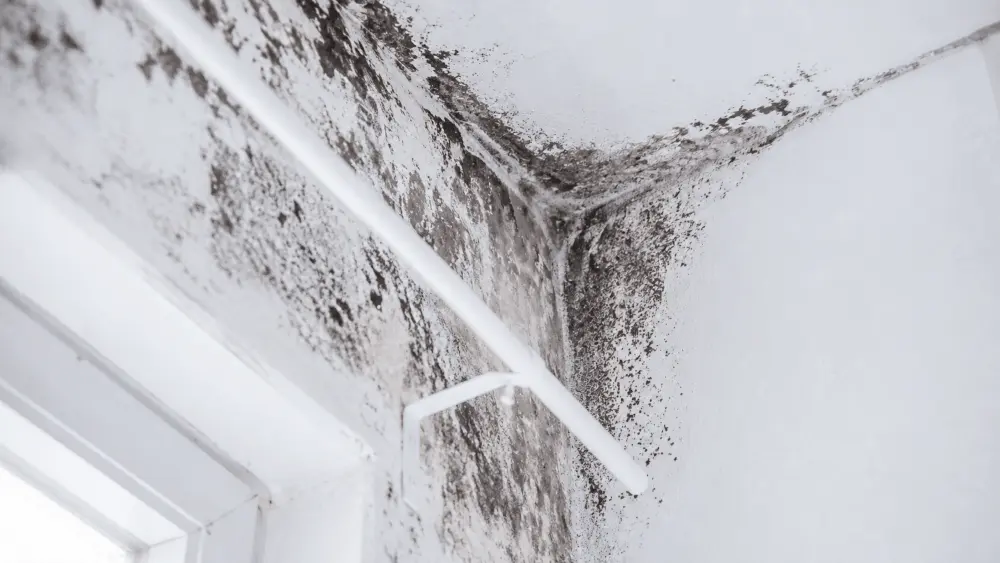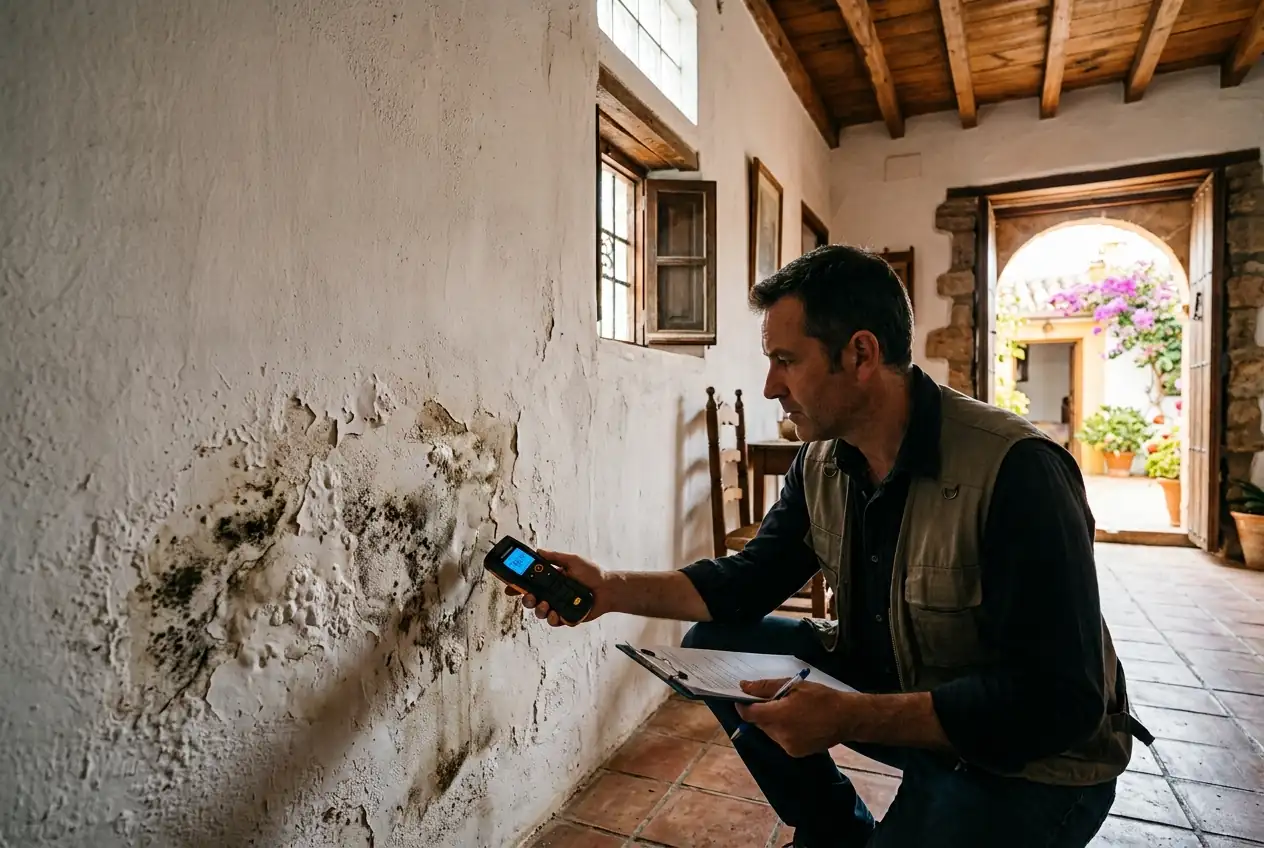
A damp patch on a wall. A musty smell in a wardrobe. Condensation on the windows in winter.
These things are easy to dismiss, especially when the rest of the property looks well maintained. A fresh coat of paint can make a wall look perfect again, and a dehumidifier may seem like an easy solution.
But when you are buying a property in Spain — whether in Alicante, Valencia, the Costa Blanca or anywhere else — damp is worth taking seriously.
The important question is not simply whether you can see moisture or mould. It is why the moisture is there, whether the problem is active, and what it could mean for the property in the future.
Sometimes the explanation is simple: poor ventilation and condensation. In other cases, the cause may be a leaking pipe, defective waterproofing, water ingress or a cold bridge.
And you may not be able to tell the difference during an ordinary viewing.
Damp Is a Symptom, Not a Diagnosis
One of the most common mistakes when looking at a property is to treat a damp mark as the problem itself.
It is not.
A stain on the ceiling tells you that something has happened. It does not tell you what caused it.
For example, a similar-looking mark could be caused by:
- condensation;
- inadequate ventilation;
- a plumbing leak;
- water entering through a roof, terrace or balcony;
- damaged waterproofing;
- moisture rising from the ground;
- or a combination of several factors.
The repair can therefore range from something relatively simple to a much more substantial building repair.
This is why simply repainting a damp area is not necessarily a solution. If the source of the moisture remains, the visible problem may return.
Why Is Damp Particularly Relevant When Buying Property in Spain?
Damp can occur in any building, but it deserves particular attention in the Spanish property market.
Many properties available on the resale market are several decades old. Some have undergone multiple renovations during their lifetime. Coastal properties are also exposed to a humid environment, while older buildings may have construction details and waterproofing systems that differ considerably from modern construction.
Renovation can sometimes create new problems as well.
For example, replacing older windows with much more airtight modern units can reduce uncontrolled air exchange. If the property's ventilation is not adequate, indoor humidity may increase and condensation can become more noticeable.
This does not mean that an older property is necessarily a bad purchase. It simply means that the condition of the building should be assessed rather than assumed.
What Causes Damp in a Property?
Condensation and Inadequate Ventilation
Everyday life produces moisture.
Showers, cooking, drying clothes and even normal occupancy all increase indoor humidity.
If humid indoor air is not adequately removed, it can come into contact with colder surfaces. When the surface temperature is sufficiently low, condensation can form.
Typical locations include:
- corners of rooms;
- areas around windows;
- behind furniture;
- bathrooms;
- kitchens;
- and poorly insulated parts of external walls.
Condensation does not necessarily mean that water is entering the property from outside. It may instead indicate a combination of indoor humidity, surface temperature and inadequate ventilation.
Leaks and Water Ingress
Water can also enter a property from outside or escape from an installation inside it.
Possible sources include:
- leaking water pipes;
- defective plumbing connections;
- damaged roof waterproofing;
- terraces and balconies;
- façade defects;
- drainage problems;
- swimming-pool installations;
- or other building elements exposed to water.
A leak does not always leave an obvious wet patch. Depending on the location and amount of water, moisture can spread through building materials before becoming visible.
Cold Bridges
A cold bridge is an area of a building that transfers heat differently from the surrounding construction and therefore becomes colder.
Typical examples include corners, structural junctions, window surrounds and connections between balconies and external walls.
If a cold surface meets humid indoor air, condensation may develop there. This is one reason why thermal imaging can be useful during a property inspection: the thermal pattern may reveal areas that deserve closer attention even when the surface looks normal.
Why Does Damp Matter?
It Can Affect the Indoor Environment
Persistent excessive humidity can create conditions that favour mould growth and other biological contaminants.
Mould may cause or worsen respiratory irritation and allergic symptoms in some people. The effects vary from person to person, but visible mould, persistent musty smells and recurring condensation are all good reasons to investigate the underlying conditions.
This is not about assuming that every damp mark is a health hazard. It is about recognising that the indoor environment is part of the condition of a home — see, for example, a real case of mould and damp we found in an Alicante flat bathroom.
It Can Damage Materials
Long-term exposure to moisture can affect many parts of a property.
Depending on the circumstances, it may contribute to:
- deterioration of plaster and finishes;
- damage to timber elements;
- corrosion of metal components and fixings;
- deterioration of flooring;
- damage to furniture and other contents;
- and, in more serious cases, deterioration of certain building elements.
The longer a moisture problem remains unresolved, the greater the chance that secondary damage will develop.
It Can Become an Unexpected Cost
This is perhaps the most important point for a buyer.
A small mark may cost very little to repair. But if the mark is caused by failed waterproofing, a concealed leak or another underlying defect, the cost of dealing with the real problem can be considerably higher.
That is why a buyer should not ask only:
"How much will it cost to repaint this?"
The better question is:
"What is causing this, and what will it take to fix the cause?"
Moisture ingress and damp is consistently one of the most common — and most expensive — defects we find during inspections; see our breakdown of typical repair cost ranges for the key risks property buyers face.
How Is Damp Checked During a Property Inspection?
A professional property inspection does not rely on one instrument or one measurement.
The inspector normally combines visual observations with appropriate measurements and the characteristics of the building.
Moisture Meter
A moisture meter can help identify areas where the moisture level in a building material is higher than expected.
It can be useful for checking walls, ceilings, floors and other accessible areas, particularly where there are signs that warrant further attention.
However, moisture meters have limitations.
Different materials behave differently, and readings depend on the instrument and measurement conditions. A reading should therefore not be interpreted in isolation as proof of a leak or as a complete measurement of the moisture content of an entire wall.
It is one piece of evidence.
Thermal Imaging
A thermal imaging camera records surface temperature differences.
It can help identify:
- thermal bridges;
- areas with unusual heat loss;
- cold surfaces;
- potential condensation zones;
- and certain thermal patterns that may be associated with water ingress.
But thermal imaging has an important limitation: a thermal camera does not directly measure water.
It identifies temperature differences. The inspector must then interpret those differences in the context of the construction and other observations.
This distinction matters. A good inspection should not promise that a thermal camera can simply "see hidden damp behind the wall". It can identify an anomaly that may justify further investigation.
Indoor Humidity Measurement
Relative humidity inside the property can also provide useful information.
A single humidity reading does not diagnose a damp problem, but it helps establish the conditions under which condensation may occur.
For example, high indoor humidity combined with cold surfaces and poor ventilation can create conditions in which condensation becomes much more likely.
What Can an Inspection Tell You Without Opening the Building?
A non-invasive inspection cannot see everything inside a wall, floor, ceiling or structural element.
That is an important limitation — and a professional inspection should make it clear.
What it can do is help identify:
- visible evidence of moisture;
- areas with abnormal moisture readings;
- unusual thermal patterns;
- conditions favourable to condensation;
- signs that may be consistent with water ingress;
- and areas that may require further investigation.
In other words, the purpose is not to pretend that every hidden defect can be detected without opening anything. The purpose is to find the warning signs and determine whether they justify looking deeper. If you want to get a feel for what this looks like room by room, our DIY inspection checklist covers the same visual red flags a buyer can check before ever booking a professional.
If a significant issue is identified, the next step may be a more specialised investigation. That could involve a building specialist, leak-detection specialist, structural engineer or another appropriately qualified professional, depending on the problem.
A Property Inspection Is Not the Same as a Structural Investigation
This distinction is important.
A pre-purchase property inspection is intended to give the buyer a practical assessment of the property's observable and measurable condition.
A structural investigation has a different purpose.
If an inspection identifies significant cracking, movement, deformation or another potential structural concern, a specialist may need to investigate the cause in much greater detail.
The two services therefore complement each other.
The first inspection helps answer: "Is there something here that I should be concerned about?"
A specialist investigation may then answer: "What is causing it, how serious is it, and what needs to be done?"
You do not necessarily need the second type of investigation for every property. For a fuller look at how a property inspection, a RICS-style building survey and a structural survey actually differ, see Property Inspection vs Building Survey.
Why Should You Check for Damp Before Buying?
A property viewing is useful, but it has limitations.
You may visit on a sunny day when the windows are open. The property may have just been painted. Furniture may be positioned against walls. A room may look completely normal.
The seller may tell you that an old damp problem was repaired years ago.
All of that may be true.
But as a buyer, you are making a long-term financial decision. An independent inspection gives you another perspective — one focused on the physical condition of the property rather than on completing the sale.
If a problem is identified before you commit to the purchase, you have options. You may decide to:
- ask the seller to investigate or repair it;
- obtain a quotation for the necessary work;
- use the potential cost when negotiating the price;
- commission a more specialised investigation;
- or reconsider the purchase if the risk is not acceptable.
Once the purchase is completed, your options can be much more limited.
Damp Does Not Always Mean You Should Walk Away
It is also important not to go too far in the other direction.
Finding a damp mark does not automatically mean that the property is a bad investment. Some moisture problems are relatively straightforward to resolve.
The important thing is to understand:
- where the moisture is;
- whether it appears to be active;
- what the likely source is;
- whether there is secondary damage;
- and what further investigation or repair may be appropriate.
Only then can you make a sensible decision.
Frequently Asked Questions
If I Cannot See Mould, Does That Mean There Is No Damp?
No. Moisture can exist without visible mould or staining. Conversely, a visible stain may also be the remains of an old problem that has already been resolved. This is why the history of the property, visual observations and appropriate measurements all matter.
Can a Dehumidifier Solve the Problem?
A dehumidifier can reduce relative humidity in the air, but it does not remove the underlying source of moisture. If the cause is a leak, defective waterproofing, inadequate ventilation or a cold surface, that cause needs to be addressed.
Can Thermal Imaging Always Detect Hidden Moisture?
No. Thermal imaging records surface temperature differences rather than measuring water directly. It can help identify thermal anomalies that may be associated with moisture or other building problems, but the findings need to be interpreted alongside other evidence.
Is a Moisture Meter Enough to Diagnose a Damp Problem?
No. A moisture meter is a useful diagnostic tool, but its readings depend on the material, instrument and measurement conditions. A reliable assessment normally combines measurements with visual inspection and an understanding of the building.
How Much Can Damp Affect the Value of a Property?
There is no single percentage or fixed amount. The impact depends on the cause, extent and likely cost of the necessary repairs. A minor condensation issue caused by inadequate ventilation is very different from a persistent leak or defective terrace waterproofing. For a buyer, the important point is to establish the likely repair requirement before agreeing the final purchase price.
Is Damp a Dealbreaker When Buying a House in Spain?
Not automatically. A single, well-understood damp mark with a known, resolved cause is a very different situation from an active leak or failed waterproofing with no clear explanation. What matters is identifying the source, checking whether it's still active, and pricing in the realistic cost of fixing it — not the mark itself.
How Do I Check for Damp Before Buying a Property?
Start with what's visible: corners, window surrounds, behind furniture, bathrooms, and any area with a musty smell — our DIY inspection checklist walks through this room by room. Beyond that, a professional inspection adds moisture-meter readings, thermal imaging and an assessment of the likely cause, which a viewing on its own can't give you.
The Bottom Line
Damp is not simply a mark on a wall. It is a warning sign.
Sometimes it points to something relatively simple, such as inadequate ventilation or condensation. Sometimes it indicates a thermal bridge. In other cases, it may be associated with a leak, water ingress or defective waterproofing.
You cannot always determine the cause from a normal viewing. That is where an independent pre-purchase property inspection can be useful.
It does not replace a structural investigation when one is needed. It does not replace legal due diligence, a property valuation or other specialist advice.
Its purpose is simpler: to give you a better understanding of the property before you commit to buying it — and to tell you when something deserves a closer look.
When you are spending a substantial amount of money on a home in Spain, that information can be worth having.
Before you buy — know what you are buying.